Melbourne Sports Team Portraits: Turning Practice into Portrait-Perfect Memories
There is a particular rhythm to a good sports team portrait day in Melbourne. It starts long before the shutter clicks. It begins in the car on the way to training, while you’re still half thinking about exposure settings and half thinking about people. The goal is simple, but the path is rarely tidy: make every player look like themselves, make the team look like a team, and make the image feel worth keeping years after the season has changed.
I’ve photographed enough Melbourne Sports Team Portraits to know that the “perfect” look is almost never the result of one magic trick. It’s the result of small decisions that add up. Where you stand so the background behaves. How you direct a captain without making them feel like they’re performing. When you let the athletes move, and when you ask for stillness. The best portraits don’t look staged, even when they are carefully planned.
Why practice is your real studio
Training sessions are full of usable light, real body language, and genuine team energy. The tricky part is that portraits require a different pace. During drills, players react. For portraits, they pose, and posing is harder than it looks, especially for athletes who spend most of their time moving.
When you photograph sports teams, you’re balancing three things at once:
First, the look has to be clean. No cluttered backgrounds that compete with faces. No harsh spill light that flattens skin or turns uniforms into blown-out patches. Second, the expressions have to feel honest, not forced. Third, the team has to fit into the frame like they belong there, even if they’re different heights, positions, and levels of comfort in front of a camera.
Using practice as your source material helps because the athletes are warmed up. Their posture is already athletic, their shoulders sit naturally, and their eyes are engaged. That makes a big difference compared to a cold start on portrait day, when you’re asking players to perform a look they haven’t physically settled into yet.
The Melbourne realities that shape the photos
If you’ve ever tried to plan outdoor portraits in Melbourne, you already know the city has weather moods. You can walk outside at 9:00 am and find crisp light, then be dealing with cloud cover by midday, followed by a sudden breeze that tugs at kit fabric like it’s trying to rearrange your composition.
That’s why I like to scout with the day’s conditions in mind. You don’t need a complicated setup, but you do need a realistic plan for the variables you can’t control.
For example, if the light is bright and directional, you can use it to shape faces. If the light is flat from cloud cover, you lean into contrast by selecting a background that gives separation. If the wind is up, you adjust the pose timing and choose moments when the hair and jersey settle, even if it means taking a few extra frames to get one clean shot.
A sports photographer in Melbourne is constantly making judgment calls like this, because teams don’t pause training for your preferences. You work with what the environment gives you, and you keep the process calm so players don’t feel like they’re being rushed.
What “portrait-perfect” actually means on the day
A lot of clients think portrait-perfect means sharp faces and good lighting. That’s part of it, but it’s not the whole story. A great team portrait has structure and intention.
I look for:
- faces that are clearly visible, not shaded or partially blocked by someone’s arm or shoulder
- a uniform look across the team, meaning nobody has a wildly different brightness level because of where they stood
- confident expressions that match the athlete’s personality, whether that’s playful, focused, or quietly intense
- a sense of togetherness, which is easy to lose when everyone stands too far apart or in rigid lines that feel unnatural
The difference between a “technically fine” photo and one that feels premium is often a fraction of an inch in stance, a subtle direction of chin angle, or the timing of when the team relaxes into their pose.
I’ve had players who are usually camera shy relax completely when they’re guided through a short rhythm, something simple like: stand, breathe, settle the shoulders, look as a group. It takes a bit of communication, but it builds trust fast.
Directing athletes without killing the vibe
Directing a team is a skill. You can’t talk like you’re running a meeting, and you can’t treat athletes like props. The best guidance is brief, specific, and respectful. It acknowledges effort, it doesn’t embarrass anyone, and it keeps energy moving.
On the practical side, it helps to know that different sports produce different body habits. Footballers often have a certain squared stance when they’re not running. Netball players may naturally bring their shoulders and hands into a poised, ready position. Runners might look more comfortable with a slight lean or weight shift. If you photograph enough teams, you start to see patterns.
But you also learn to avoid stereotypes. Some players want to be active in the pose, some want to be statuesque, and a few just need time to get comfortable. If you rush the uncomfortable players, the entire frame suffers because their faces remain tense. If you slow down too much, everyone else gets restless and starts fidgeting.
The sweet spot is to direct the group in one steady cadence, while giving individual players tiny corrections without calling them out. For example, instead of saying “you’re blocking the view,” you might say “hands forward a little,” or “step half a shoe length, keep your shoulders open.” It keeps the tone constructive and it protects their confidence.
Composition choices that hold up in print
When teams plan to print, frame, or order albums, composition becomes even more important. A portrait that looks good on a phone can fall apart when cropped for a wall print, or when displayed at a large size where small background distractions become noticeable.
That’s why I aim for portraits that are robust. Backgrounds are chosen for texture and simplicity, not just for beauty in the moment. If you’re shooting near fences, buildings, or trees, you’re thinking about how those shapes sit behind heads and shoulders.
Group shape matters too. Teams often start in rows because it feels orderly, but rows can flatten expressions and hide faces. Sometimes sports photographer a gentle arc works better than straight lines, especially when the athletes vary in height. You can also create separation by using staggered positions, with taller players slightly back and forward, rather than everything aligned perfectly.
The technical side supports the creative intent. If you’re using a lens that creates a mild background blur, you gain forgiveness. The player edges still need to be clean, but you can reduce background noise enough that faces remain the priority.
The quiet art of choosing timing
Sports photographers are often asked about gear, but timing is just as crucial. Light changes. Players get tired. Expressions shift. Kits wrinkle. Hair settles and then stands up again under the wind. If you try to capture everything in one continuous moment, you’ll miss the best micro-expressions.
I plan portrait sequences in short bursts. Take the team portrait first when the group is fresh and aligned, then move to smaller group shots or individual head-and-shoulders portraits. That ordering reduces pressure. A player who has already done the main team pose usually relaxes more for subsequent images.
Also, remember that athletes are used to competition timing, not photographic timing. They can hold a pose, but they don’t want to feel like they’re waiting. When you keep your directions short and you call frames at a reasonable pace, the final set looks natural because it was made at a human rhythm.
How to handle the “everyone wants their best angle” problem
There’s always at least one player who is convinced they need a different angle. Sometimes it’s a personal comfort issue, sometimes it’s a routine they’ve seen on social media, and sometimes it’s just that they’re taller or shorter than the average in the group.
The professional approach is to give people what they need without turning the session into negotiations.
I find that most angle preferences can be addressed through positioning rather than repeated attempts. A small move can change the way light hits the face, reduce a distracting background overlap, and create cleaner framing. Instead of taking dozens of separate portraits, you adjust the lineup and capture again with everyone benefiting from the improved structure.
When someone really dislikes the first https://sports-team-portraits-melbourne.onrender.com version, I will take a few extra frames individually, but I try to avoid turning that into a separate session. The team portrait still needs cohesion. The final results should feel like one story.
That’s the difference between a photographer who just takes photos and a photographer who shapes the final set.
A practical checklist for a smooth team portrait session
You don’t have to overcomplicate the day, but good preparation prevents the small problems that cause big delays. Here’s the kind of checklist I share with clubs and team managers when we’re planning Melbourne Sports Team Portraits.
- Confirm the lineup early, with jersey numbers if relevant, so the group can be arranged efficiently
- Identify the main background area and a backup option for weather or wind
- Decide whether you want individual portraits, team portraits, or both, and in what order
- Provide clear instructions about kit, hair, and accessories, especially for long hair or loose items
- Assign one point of contact who can gather missing players quickly
This isn’t about control for its own sake. It’s about protecting the session flow so players do not lose momentum or confidence.
Working with parents, clubs, and coaches
Sports portraits are rarely just between a photographer and an individual athlete. There are clubs, team managers, coaches, and usually parents who care deeply about the outcome.
The most important thing is clarity. People need to know what will happen and when. They also need to know what is in the photographer’s responsibility versus what the club handles.
From my perspective, coaches typically care about team representation. They want players looking sharp and aligned with the club identity. Managers often care about logistics: lineup order, timing, and communication. Parents often care about face clarity, natural expressions, and images that look like their athlete.
When those priorities clash, it helps to set expectations early. For instance, a coach may want everyone in a very specific formation. A parent may want a closer individual shot. You can do both, but you need to structure the session so you’re not constantly jumping between scales. The athlete experience stays smooth, and the final set has variety without feeling chaotic.
The difference between “a photo” and a keepsake
There’s a moment I look for while reviewing images after a session. It’s not just sharpness. It’s the feeling that the player will recognize themselves instantly, and that the team will look like they remember who they were at that time.
Sometimes that recognition comes from a particular expression. A midfielder might look slightly too serious at first, then smile when they relax their jaw. A goalkeeper might have a determined stare, then shift into a confident half-smile that makes them look like a leader. Those are the micro-changes that turn an image from documentation into memory.
Other times it comes from alignment and uniform presentation. When players look well framed and their faces are readable, the portrait carries authority. It doesn’t feel like an afterthought.
This is why I treat the editing stage as part of the craft, not a mechanical process. Skin tones should look natural under local lighting conditions. Uniform colour should remain consistent across the set. Contrast should support faces, not flatten them. Small fixes matter, because teams will notice when one player’s brightness looks different from the rest, or when background distraction remains.
A photographer melbourne-based can get the technical basics right, but the final quality comes from attention to consistency and detail across an entire group.
Options that make sense for different team sizes
A team portrait session for twenty players is not the same as a session for fifty. The approach has to scale, and you need to keep the athletes’ comfort in mind.
With smaller teams, you can take more time to experiment with poses and angles. With larger squads, you prioritize efficiency while still aiming for high-quality framing. That may mean limiting the number of setups, using a clear lineup strategy, and moving quickly between team and individual images.
If you’re photographing a club that has multiple teams on the same day, you also need to protect the final delivery timeline. A good workflow prevents rushed selection or backlogs that disappoint families.
This is where professional planning matters. It’s not about making the session longer. It’s about keeping it organized so the final gallery feels complete.
Weather-proof your plan, not your optimism
Weather changes can’t be treated like an emergency plan for a disaster. A good portrait photographer in Melbourne treats weather as a controllable variable within limits.
If it’s sunny and bright, you look for softer patches of shade or you reposition to avoid harsh shadows. If it’s overcast, you take advantage of flattering light, then build contrast through composition and clothing separation. If it’s windy, you time shots between gusts and watch for fabric movement.
The key is to keep players comfortable and not to blame them for the conditions. Athletes are tough, but they’re also people. If the wind is strong, acknowledge it. If rain threatens, adapt. When the team feels respected, they give better expressions, and they cooperate with adjustments.
A short session flow that consistently works
Clubs often ask what the actual session looks like. I can’t promise one plan fits every team, because each Melbourne Sports Team Portraits project has its own constraints, but this flow covers what I see work across many training grounds and indoor facilities.
- Start with the core team portrait setup once everyone is warmed and in place
- Capture individual or small group portraits next, so athletes who need extra time get it
- Finish with additional frames that add variety, such as captains, benches, or position groups
- Do a quick check for any missing jersey numbers, occluded faces, or adjusted hair and kit
- Provide direction for how the club wants to present ordering or downloads, so families know what to expect
You’ll notice there’s nothing complicated here. The advantage is that it prevents the session from spreading out into a slow, exhausting grind.
How to get the best results from a “practice day” shoot
If you’re planning a shoot during training, you can’t ask players to stop moving forever. So you shift the portrait objective. Instead of forcing everyone to stand perfectly still for long periods, you capture expressions during natural pauses, then reset for clean frames.
The best results come when the coach can give players a short break at the right moment, and when the photographer can quickly establish the composition and lighting before directing the group.
Communication is everything. I’ll usually coordinate with the coach or team manager so we know when the training cycle ends and we have a few minutes. Then we use that window to get the most important images first, while the athletes are still engaged and not fully fatigued.
That’s the strategy that makes the portraits feel authentic. The athletes are not just posing, they’re transitioning from real work into a moment of representation.
Editing for authenticity, not perfection
After the shoot, the real test arrives in editing. A team portrait can be technically accurate and still feel wrong if the tones are overly processed or the contrast makes skin look unnatural.
My aim is to preserve what the camera captured, then refine. That means correcting exposure inconsistencies that happen when players stand in different light patches. It also means keeping colour faithful so uniforms do not shift in a way that looks artificial.
When a player’s face is partially shadowed, the solution isn’t always aggressive brightening. Sometimes it’s tonal balancing, sometimes it’s selecting a frame where the face is cleanly lit, and sometimes it’s simply choosing the image that captured the expression better. Editing should support the truth of the moment, not overwrite it.
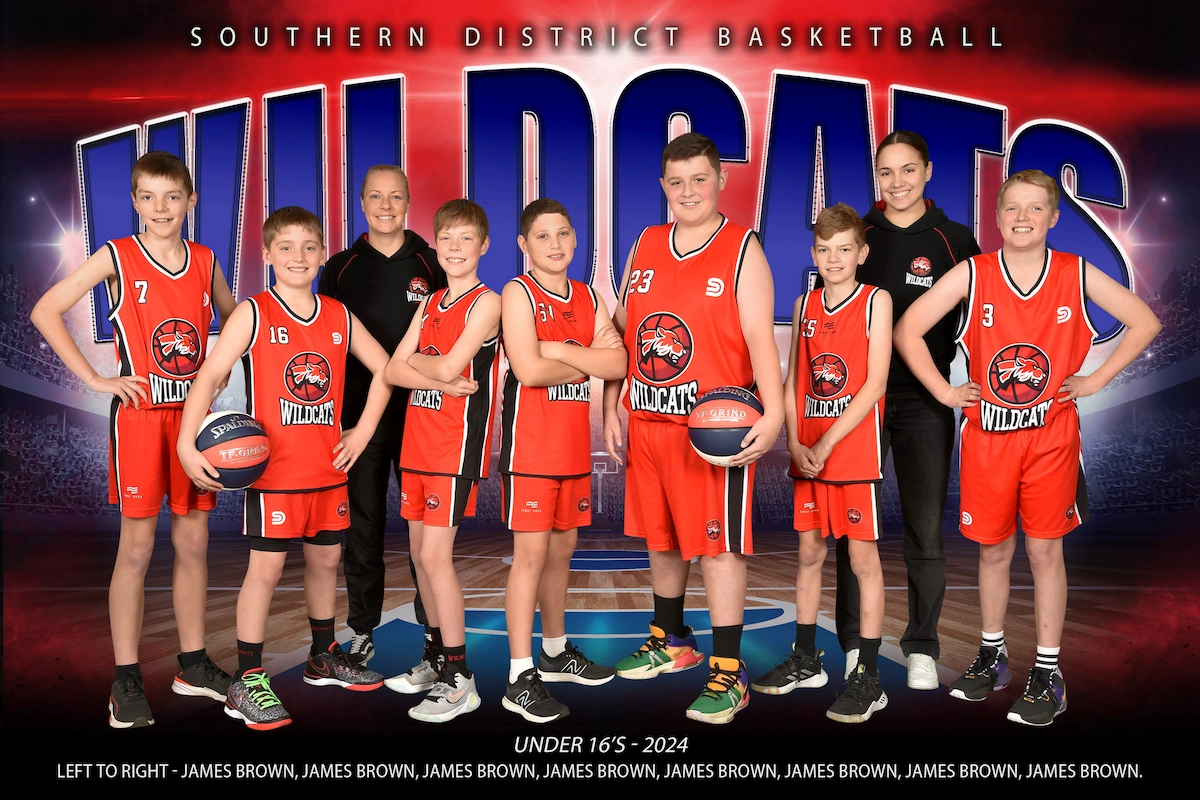
Consistency across the full set is also crucial. A single portrait that differs too much from the rest of the team can stand out in a way that feels odd, even if it looks good on its own. Families notice those differences, especially when the team gallery is shared across devices.
What you’ll notice in the best Melbourne sports portraits
When Melbourne Sports Team Portraits are done well, you can spot them quickly. The team looks cohesive. The faces feel readable from a distance. The expressions feel like they belong to that squad and that season.
You also see that the athlete experience was respected. Players do not look bored. They do not look stiff in a way that screams “forced pose.” The images feel like a snapshot of identity, not just a headcount.
And the best part is what happens later. Months after the season, someone sees the team photo on the wall and remembers not only the result, but the effort. The portrait becomes a story marker, a reminder that the group trained together, learned together, and fought through the same tough practices.
Choosing the right photographer for your club
A sports photographer is not only a technical role. It’s part communicator, part organizer, part director, and part problem solver. You need someone who can talk clearly to coaches, coordinate with teams, and still make athletes feel comfortable in front of the lens.
If you’re comparing options, look for the approach, not just the sample images. Ask how sessions are structured. Ask how they handle missing players, wind, and mixed heights. Ask what’s included in the gallery and how families receive their selections.
The strongest photographers in Melbourne bring a calm process to the day. They know that athletes are focused on performance, not photography, and they build a workflow that helps the team stay in its zone.
In the end, the photographs should feel like a reward. Something earned.
If you want Melbourne Sports Team Portraits that turn practice energy into portrait-ready memories, the best outcomes come from planning, thoughtful direction, and a consistent eye for detail. When those pieces align, the images don’t just document a season. They preserve it.
Pure Sport Images
23 Grandview Ave, Mulgrave VIC 3170, Australia
+61 413 157 614
[email protected]
Website: https://puresportimages.com.au/